
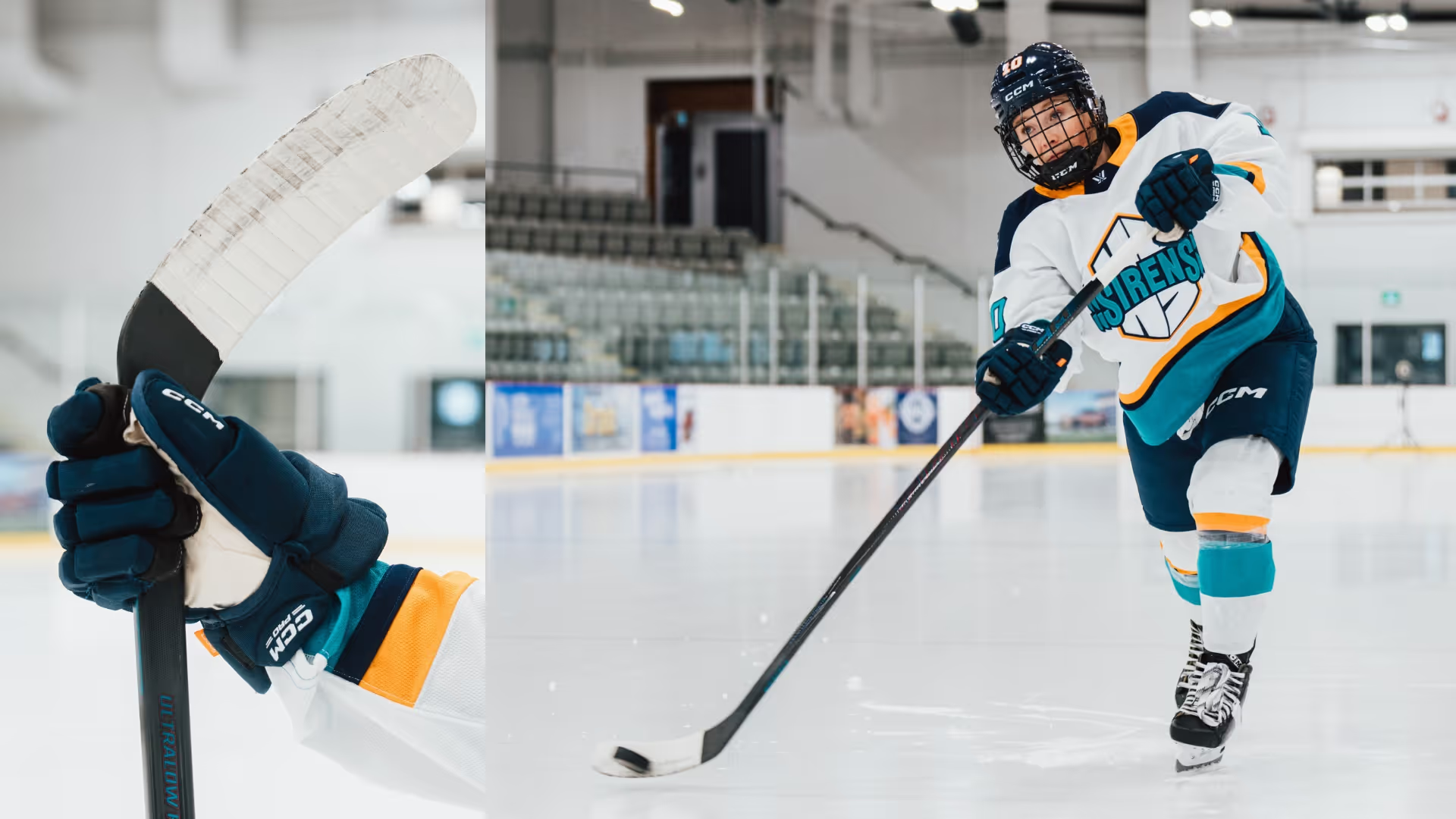
Hockey Stick Buying Guide 2025: Flex, Kick Points & Blade Selection
The right hockey stick can completely change how you shoot, pass, and handle the puck.
Whether you’re looking for more shot power, a quicker release, or better control, understanding the fundamentals of stick design is key.
This 2025 guide from Hockey Base covers everything — from flex and kick points to blade patterns and material tiers — to help you find the stick that fits your game.
1. Understanding Stick Flex
Flex rating measures how stiff the shaft is — or how much it bends when force is applied.
A lower flex bends more easily (better for quick releases and lighter players), while a higher flex requires more force but delivers more power.
General rule:
Flex rating ≈ half of your body weight in pounds.
< 50kg (110 lbs) | 40–50 flx
50–70 kg (110–155 lbs) | 55–70 flx
70–85 kg (155–185 lbs) | 75–85 flx
85–100+ kg (185–220+ lbs) | 90–110 flx
Tips:
1. Cutting the stick shorter increases stiffness (each 2.5 cm / 1 inch ≈ +3–5flex).
2. Junior and intermediate sticks are already softer to match smaller players.
3. Many pro players use slightly lower flex than expected — it allows better load and release in tight spaces.
2. Kick Points: Power vs Quick Release
The kickpoint is the zone on the shaft that bends during a shot. It determines how quickly energy transfers to the puck.
Low Kick - Near the blade: Quick release, snapshots ( Warrior Covert, CCM Ribcor )
Mid Kick - Middle of shaft: Powerful slapshots, long windups ( CCM Tacks, TRUE Project X )
Hybrid Kick - Adaptive flex zones: All-round performance ( Warrior Alpha, CCM Jetspeed )
Choosinga kick point:
- If you take most shots in tight or off the rush → Low kick
- If you load up for slapshots or one-timers → Mid kick
- If you do a bit of both → Hybrid kick
3. Blade Patterns & Curves
Your blade curve determines how the puck leaves your stick — influencing accuracy, lift,and handling.
Every brand has its own naming (P28, P92, MC, etc.), but the same key factors apply:
Curve depth: Puck lift & shot height ( Deeper = easier to lift the puck )
Curve position: Where the blade starts to curve ( Heel = control, Toe = quicker release )
Face angle: Open (lifts easily) vs closed (keeps shots low) ( Open = wrist shots, Closed = accuracy )
Lie: Blade angle vs shaft (Lower = upright stance, Higher = deeper knee bend )
If you’re unsure, a mid-curve, mid-lie blade (e.g. P92 / W03 types) offers the most balanced feel.
Expert tip:
Blade lie is often overlooked. If you frequently catch passes on the heel or toe, try adjusting lie angle before switching curves entirely.
4. Shaft Shape, Grip & Finish
The shaft profile changes how the stick feels in your hands.
Round shafts: Smooth transitions for stickhandling.
Square shafts: More edge definition for control.
Ergonomic / tapered shafts: Fit natural hand contours and improve loading.
Grip coatings also vary:
Matte finish: Easier hand movement, preferred by players who roll their wrists often.
Tacky grip: Better hold during powerful shots.
5. Stick Materials & Weight Classes
Modern sticks use modern materials layered for stiffness and feel.
Entry-level sticks: blend fiberglass and carbon for durability.
Mid-tier models: use higher carbon content and lighter resins.
Elite sticks: use premium carbon (e.g. Sigmatex, Minimus Carbon) and foam-bladecores for top balance and feel.
Lighter isn’t always better:
If you often break sticks, a slightly heavier model may save money and frustration without sacrificing much performance.
6. Stick Length — Finding Your Ideal Height
When standing on skates, the top of your stick should reach roughly between your chin and nose.
Shorter sticks improve control and quick release; longer sticks add reach and leverage.
Short: Chin level or below ( Quicker hands, better puck control )
Mid: Between chin and nose ( Balanced, versatile )
Long: Nose or eyes ( More reach, powerful slapshots )
Remember that cutting your stick changes flex, so always check the new stiffness after trimming.
7. Buying by Level & Budget
Recreational: €80–€150 Fiberglass/carbon blend + heavier stick overall
Performance: €150–€250 Mid-grade carbon fiber + Lighter, better balance
Elite: €250+ High-grade materials + Ultra-light, maximum energy transfer and control
You’ll feel a noticeable difference in release speed and balance between levels, but even a mid-tier stick can perform extremely well if flex and kick point are correct.
8. Try Before You Buy
Every player has a unique shot and stick feel.
Visit one of our 15 stores to:
- Measure your ideal flex and shaft length
- Test different kick points and grips in our shooting lane
- Compare curve options with real pucks
- Get professional fitting advice for your position and playing style
9. Key Takeaways
- Match flex to your strength and shooting style.
- Choose a kick point that fits your position and shot type.
- Pick a curve and lie that helps you control the puck naturally.
- Focus on fit and feel, not just weight or brand.
- Test sticks in-store whenever possible — every small difference matters.
11. About Hockey Base
Hockey Base is Finland’s leading hockey equipment retailer with 15 stores, a Training Center, and a webshop.
Our expert team — made up of active players and certified equipment specialists — helps every skater and shooter find the perfect setup, from youth to pro.


%20OIKEA%20(7).jpg)
%20OIKEA%20(6).jpg)